


Contact us 01889 597 283 | contact@oaktimberstructures.co.uk


Contact us 01889 597 283 | contact@oaktimberstructures.co.uk
How do you identify a premium-quality oak structure? If you don't know what you're looking for, then it's difficult to decipher between well-made and lower-quality structures.
If you want reassurance, we're here to give you the key signals. Read on to turn yourself into an oak structure aficionado, making certain you can see the wood through the trees.
A well-made oak structure begins with the oak itself. But why oak in the first place? Here are the key reasons oak and its natural qualities make it ideal for construction use:
Oak's aesthetic appeal makes it desirable. Beautiful neutral colours offer a warm look, and as an open-grain timber, there's a visual texture to complete the captivating natural appeal.
European oak has natural waterproofing qualities, making it one of the best timbers for outdoor use. Oak produces tyloses, a substance that plugs the pores increasing water resistance.
European Oak is naturally dense and durable, allowing it to withstand heavy loads. This strength makes it ideal for structural applications, where it can even outperform artificial materials in stress tests.
With it's exceptionally high tannin content, it has natural protection against fungal and insect infestations. Tannin is a natural acid that helps protect oak even after it is felled.
Nature does plenty of work making oak a durable timber, but that's just the start. Here's a tip to find the best of the best. European Oak beams are subject to the European grading system EN 975, measuring their visual condition.
QP1 and QPA are top grades, where the likes of wane, sapwood, and knots are either limited or non-existent. To summarise, the higher the grade, the fewer defects.
You can ask about the grade of oak if concerned about the quality of a structure. At Oak Timber Structures, we only use QP1 or QPA. We can ensure this because of a careful sourcing process where we only use timber from traceable, reliable, sustainable European forests.
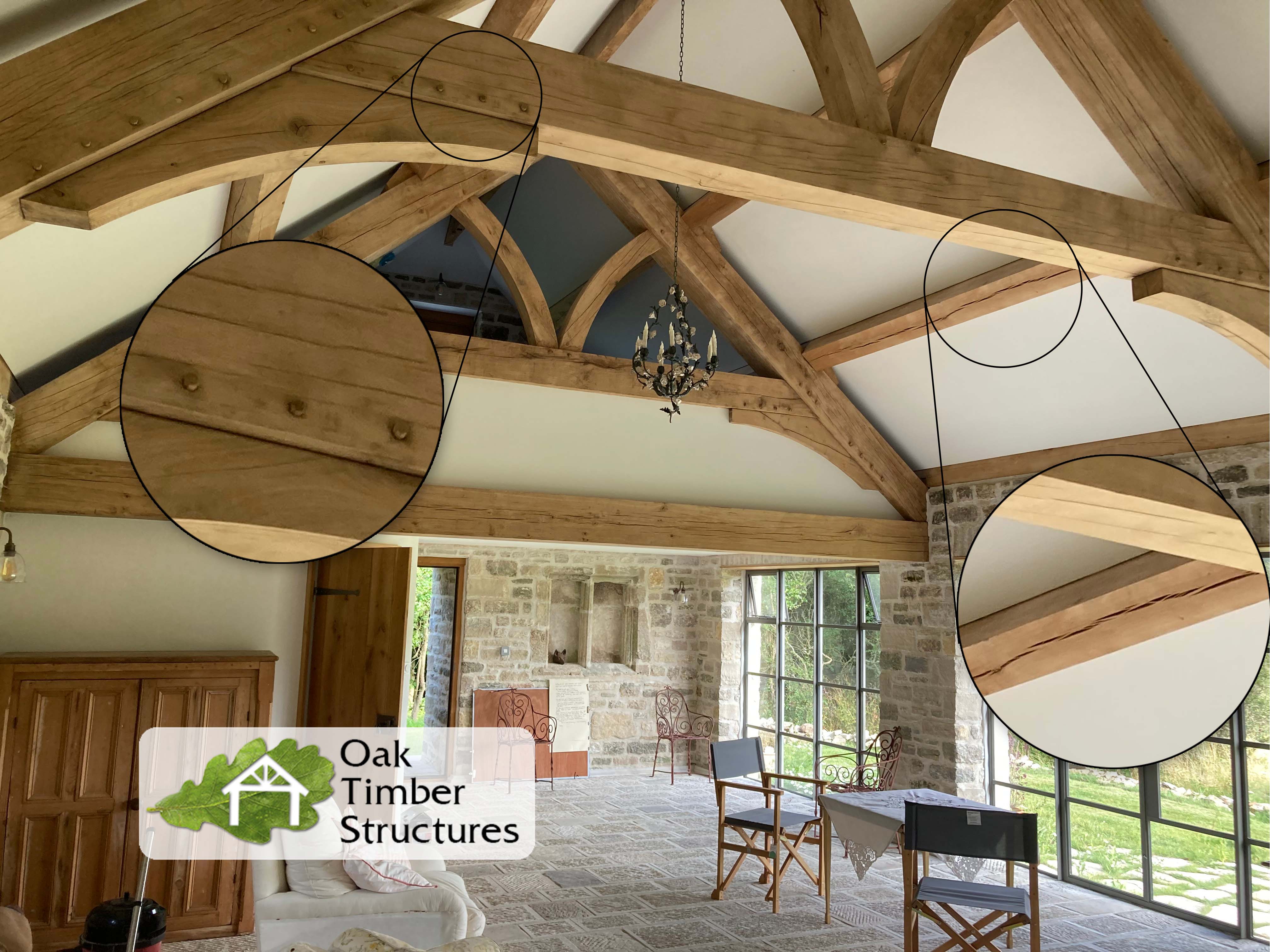
The vast majority of our structures will use green oak. Nonetheless, particularly with trusses, you'll often have the choice between green or air-dried. But what's the story between the two types of seasonings: are they a measure of quality?
Green oak is freshly sawn oak. Meaning it's cut fresh after felling, we're talking a matter of months. Recent felling means that the oak has a higher moisture content.
Air-dried has been through a drying process in a controlled outdoor space. As such, the moisture content is lower.
But why do most structures use green oak?
| Green Oak | Air-Dried Oak | |
|---|---|---|
| Colour | Green oak has a yellow-brown colour and develops the sought-after weathered look as it ages. | Our products are planed and sanded so air dried oak will be the same colour as green oak but will feature sought after surface checking/fissures. |
| Treatment | You'll have the flexibility to delay the silvering process through treatment with green oak. | Whilst not necessary for longevity, treatment will maintain its colour and prevent it silvering. Reapplication is required according to treatment guidelines to maintain its UV protection. |
| Moisture Content & Movement | The higher moisture content means more movement. It sounds concerning, but it's normal, and engineers will account for the natural process. Designers and artisans will even use this to their advantage to fuse joints together for tighter bonds. | While there's a lower moisture content, it's never completely dry so there's still movement, albeit far less. |
| Ease of Workability | Because of the higher moisture content, green oak is much easier to work with. Fissures will appear as the beam ages, but they won't affect structural integrity. | Air dried oak is tougher and has a blunting effect on tools. It will also feature shakes/splits which can make working with the wood more difficult. |
| Time Frames | Green oak is ready for crafting straight after felling. | Air-dried oak takes years to develop and needs to be stored in the right conditions. |
| Grading | Assigned a grade before crafting. | The air dried oak is graded initially but does not retain it due to shakes. |
| Price | While careful storage of green oak is necessary to stop warping, the storage timeline is considerably less so is cheaper. | To create air dried oak it needs storing for years. Storage costs add up, meaning it's more expensive than the green alternative. |
Due to the same initial grading, both air-dried and green oak have similar structural strength. So the type of seasoning isn't a matter of quality. In fact, it's commonplace for larger structures to use green oak.
Trusses must have approval from a structural engineer. So, in some cases where an aged visual is preferred and when minimal movement from shrinkage is a must, they may, but rarely, suggest air dried oak.
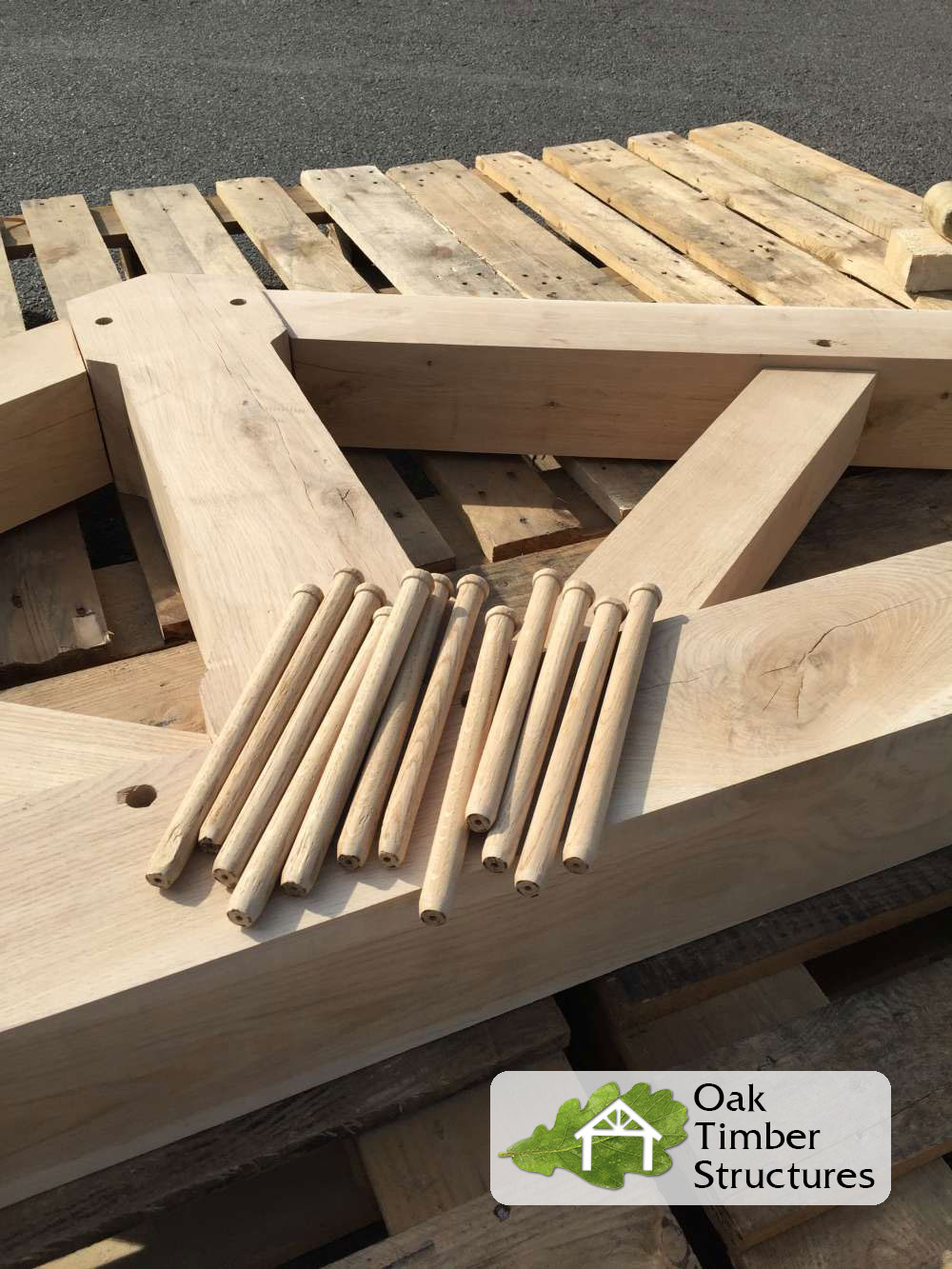
Working with the best materials requires elite craftsmanship and experience. See, even that high-quality oak will go to waste if joints don't account for movement. So how can you spot the best craftsmanship in oak structures?
Oak structures will connect using traditional joinery. Handcrafted methods such as mortice and tenon joints with dowels and dovetails show that a team of artisans has the skill set needed. When executed right, these joints will add a sleek visual interest and create a sturdy structure.
Sure, some parts of a structure, like roofing, will rely on nails or screws, but the main frame should be able to stand strong on timber to timber connections alone.
Here are hallmarks of top tier oak craftsmanship:
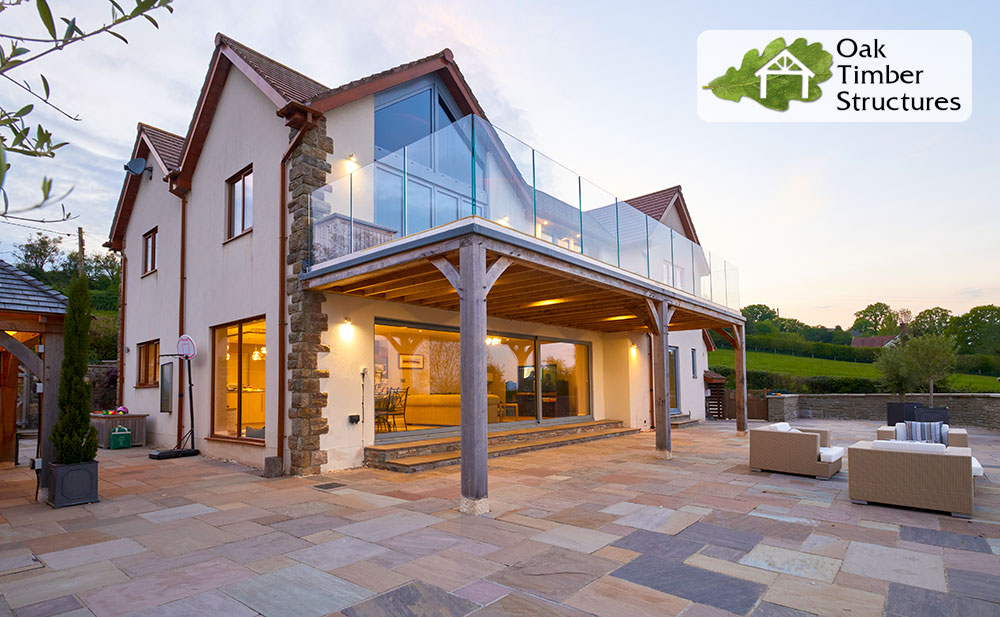
In the European grading system oak beams are QPA and QP1 grade. These two grades have a UK strength equivalent. QPA is equivalent to UK strength class D30, while QP1 is strength class D24. To further your knowledge, the 'D' in this grading stands for deciduous, a tree that sheds its leaves in changing seasons.
Timber achieves its grade by a licensed grader. They'll perform a visual inspection of the batch following strict guidelines and assign it a quality grade.
So not only will the higher grades mean fewer defects, but the fewer defects also means a higher strength grade.
The intrinsic strength of D30 and D24 oak beams can span and support over wide dimensions. These grade beams aren't only structural support but elevate interior design with their classic charm.
Identifying a well-made oak structure means recognising the harmony between quality materials and time-honoured joinery techniques. Make sure an oak structure meets high standards by checking these key quality markers:
Insisting on QP1 or QPA grade when ordering European oak beams. This grade will signal fewer defects and thus higher strength.
Look for traditional timber to timber connections, like mortise and tenon joints secured with oak pegs.
When structural prowess combines with skilled craftsmanship, it becomes an investment. A legacy structure that can adorn both interiors and gardens for decades.
While here, take the time to browse through our products and enjoy your newfound knowledge. You'll find an entire world of bespoke oak structures from gazebos to trusses.
Remember, we love oak at Oak Timber Structures, so if you have any questions about grading, or want advice for your next project, we're always happy to chat.


